The Hidden Volatility in Hyper-Scale Distribution Centers: Lessons from New York
The industrial logistics boom is pushing project footprints to unprecedented scales. To support highly automated supply chains and advanced robotics, modern distribution hubs require massive, multi-story structures with perfectly level, high-tolerance concrete slabs.
But as developers seek out expansive acreage in secondary markets across New York State, they are increasingly running into a severe subsurface liability: pyritic shale.
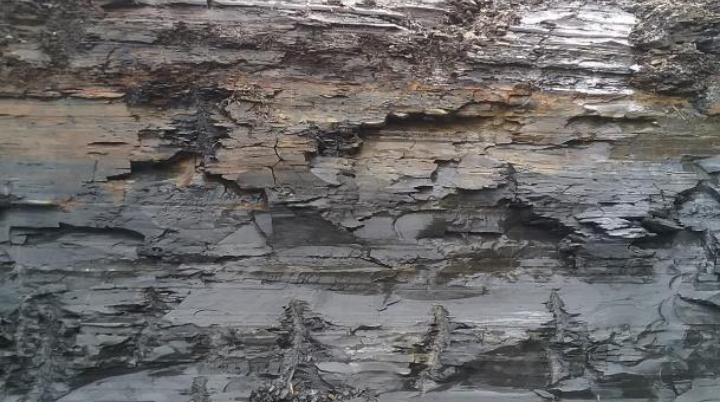
Unlike stable bedrock, pyritic shale actively reacts to environmental changes. As ground moisture fluctuates, this volatile rock formation undergoes dramatic shrink-swell cycles, exerting immense upward pressure. For a hyper-scale facility, even minor foundation shifting can warp automated tracking paths, misalign equipment, and permanently disrupt facility uptime.
Product
StormVoid® System
Type of Project
Hyper-scale distribution center

The High Cost of Mitigation and Weather Risk
Mitigating these soil dynamics on a massive site is a high-stakes engineering puzzle. For example, the material and labor costs of traditional structural heavy metal decking become cost-prohibitive in footprints exceeding 500,000 square feet.
Many general contractors turn to temporary degradable void forms to create a protective zone between the heaving soil and the slab. And these are a great option for predictably dry weather. However, traditional carton form systems introduce a massive vulnerability on site: weather exposure.
On a tightly coordinated Tier-1 build, a single major weather delay can stall the entire schedule—incurring liquidated damages and operational fines ranging from $60,000 to upwards of $100,000 per day.
Project Spotlight: Protecting a New 650,000 Sq. Ft. Facility
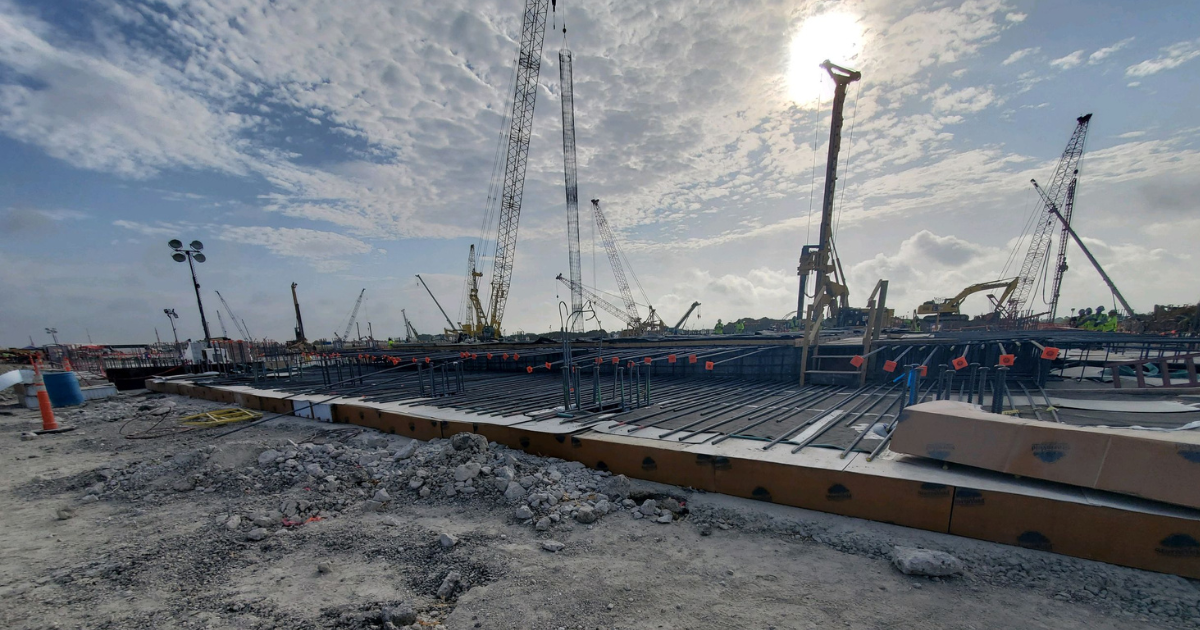
On a massive multi-story distribution center project underway in New York, the project team is navigating soil volatility and aggressive scheduling:
The Solution
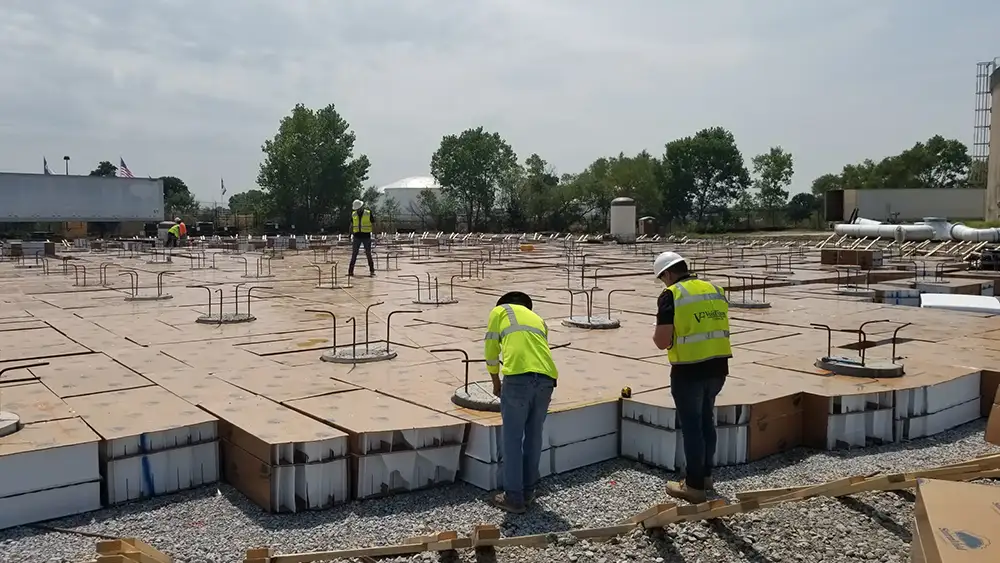
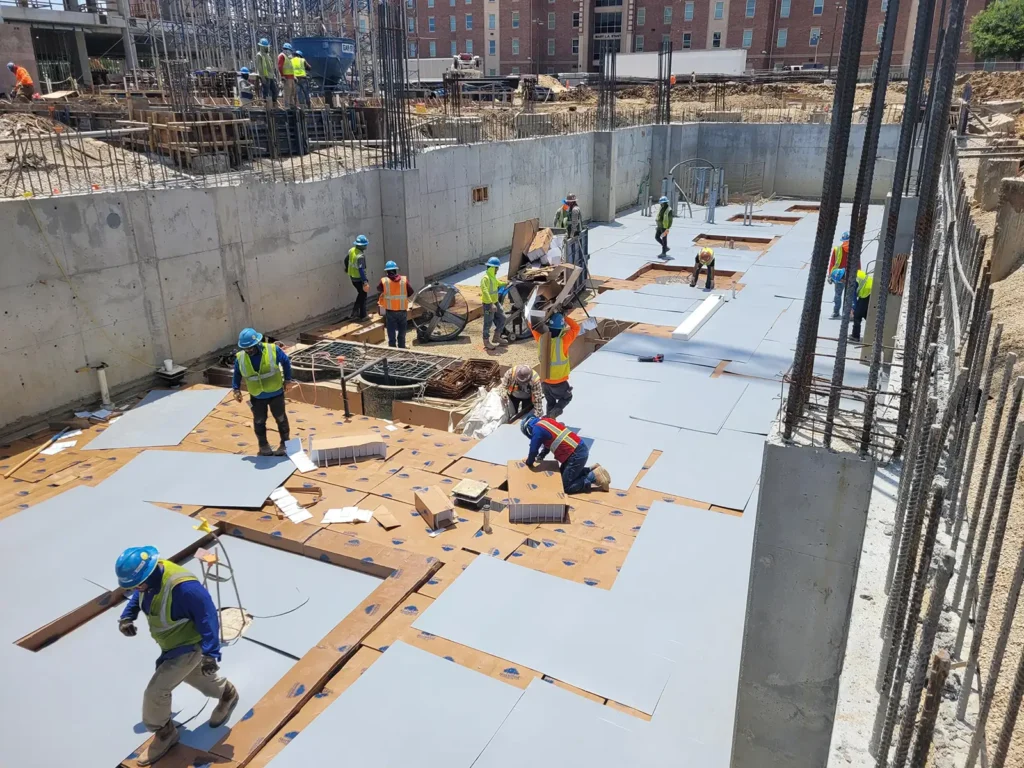
The team specified a 6-inch StormVoid system which utilizes a wax-coated carton wrap that breaks down under soil moisture, leaving a copolymer polypropylene cellular structure for expanding soil to migrate into.
Built with this copolymer core, StormVoid’s high-moisture resilience neutralizes the threat of sudden rain delays as the foundation is prepared. The system remains stable in an open trench, allowing the crew to stay on schedule for the upcoming concrete pours. The result is a permanent, below-grade void space that protects 3,500+ structural piers and the concrete slab above from volatile expansive soil movement.

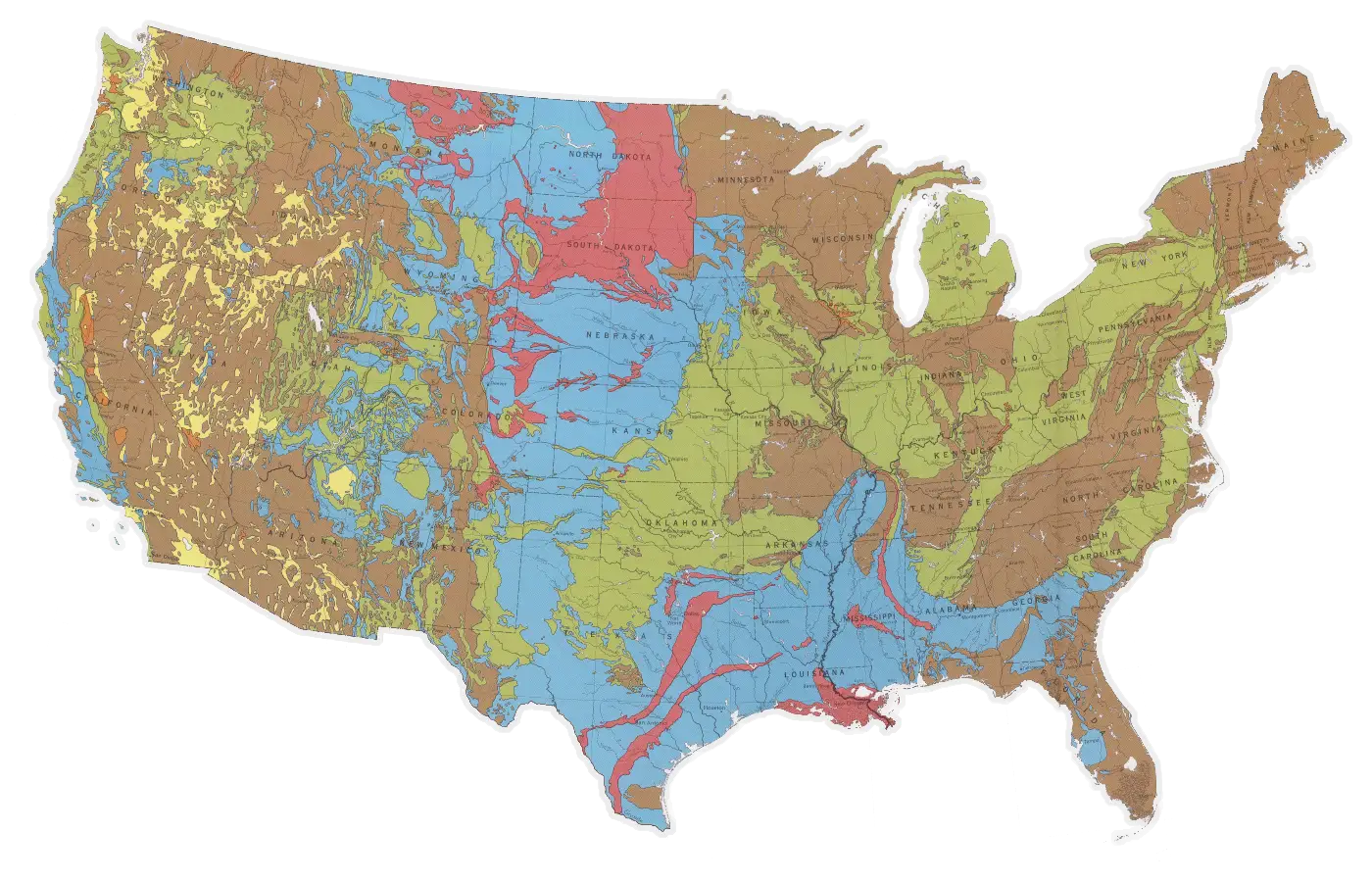
View the USGS soil map showing the swelling clays of the United States
Navigating Regional Soil Variations: Best Practices for Structural Design
This project highlights a critical opportunity for efficiency in modern industrial construction: aligning early structural design with regional geotechnical realities.
In regions like Texas, where expansive clay is a constant baseline threat, roughly 60%–70% of the local engineering community is deeply accustomed to detailing and specifying void systems. However, in areas like New York and the broader Northeast where these geological conditions are historically less common, design familiarity sits closer to 20%–30%.
On this New York build, the initial structural drawings required adjustment because the unique detailing for the sub-slab void spaces wasn’t fully integrated into the early plans. Navigating these regional design variations required several rounds of collaborative back-and-forth revisions before the structural layout was fully optimized for the field.
Key Learnings
To maximize efficiency and protect tight project schedules, below-grade void spaces should be thoughtfully considered. Engaging with manufacturers early in the design phase allows structural engineers to seamlessly dial in exact specification language and project-specific details before a project goes out to bid.
Getting these details aligned early ensures:
- Clarity for the field crew
- Prevents costly upfront redesign delays
- Secures long-term structural integrity from day one
Are you designing an industrial slab over volatile or expansive soil?
Protect your timeline from weather delays and your structure from shifting foundations. Contact our engineering team at 888.704.VOID (8643) or visit our website to schedule a technical lunch-and-learn for your firm.